
15 Best Family Dogs for Kids: Kid-Friendly Dog Breeds (2026 Guide)
Discover the 15 best family dogs for kids in 2026. Compare temperament, energy, and grooming needs to find the perfect kid-friendly dog breed.
Best Family Dogs for Kids: Kid-Friendly Dog Breeds
Bringing a dog into a household with children is one of those decisions that feels simple on the surface and gets more complicated the moment you start researching it. Scroll through any pet forum and you’ll find a hundred opinions on which breed is “the best” for kids, and most of them contradict each other. That’s because the right answer depends on more than cuteness — it depends on temperament, energy level, size, grooming demands, and how well a particular breed’s instincts line up with the chaos of everyday family life.
Choosing the right family dog matters more than most first-time owners realize. A mismatch between a high-energy working breed and a household that can’t provide enough exercise often ends in frustration, destructive behavior, or worse, a dog being rehomed. On the other hand, a well-matched breed can become one of the most rewarding parts of a child’s upbringing. Kids who grow up with a patient, gentle dog tend to develop empathy earlier, learn responsibility through daily care routines, and often feel more confident and less anxious. Dogs also encourage kids to spend more time outdoors and moving around instead of sitting in front of a screen.
This guide breaks down 15 of the best family dogs for kids, based on temperament, patience, trainability, safety, and how well each breed adapts to homes with children. You’ll find detailed profiles for each breed, a side-by-side comparison table, and a practical framework for narrowing down your own decision based on your home, your kids’ ages, and your family’s lifestyle. Whether you’re leaning toward a classic Golden Retriever or considering a lower-shedding option like a Poodle or Bichon Frise, you’ll leave this guide with a clearer sense of which kid-friendly dog breed actually fits your household.
How We Chose These Family Dogs
Not every friendly dog is automatically a good family dog, and not every family dog is friendly with every child. To narrow this list down to breeds that genuinely tend to thrive in homes with kids, we weighed several factors that matter most to real families:
- Temperament — A calm, even-keeled disposition that isn’t easily startled or provoked, since kids are unpredictable by nature.
- Patience — Tolerance for the kind of rough handling, loud noises, and sudden movements that come with young children.
- Friendliness — A genuine enjoyment of human company rather than wariness toward strangers or new experiences.
- Trainability — How quickly and consistently a breed responds to basic obedience and household rules, which matters for safety.
- Energy level — Whether the breed’s exercise needs realistically match what an average family can provide.
- Safety around kids — Bite history, size relative to small children, and general breed reputation with pediatric safety organizations.
- Grooming needs — How much time, money, and effort the coat requires, since this affects long-term satisfaction.
- Health — Common breed-specific health issues and typical lifespan, since a healthier dog usually means fewer surprises.
- Adaptability — How well the breed handles different home sizes, climates, and lifestyles, from apartments to large yards.
No breed is guaranteed to be perfect with every child, and individual temperament always varies within a breed. Early socialization, proper training, and responsible breeding matter just as much as breed selection itself. With that in mind, here are 15 breeds that consistently show up as excellent choices for families with children.
1.Golden Retriever
Why This Dog Is Great for Kids
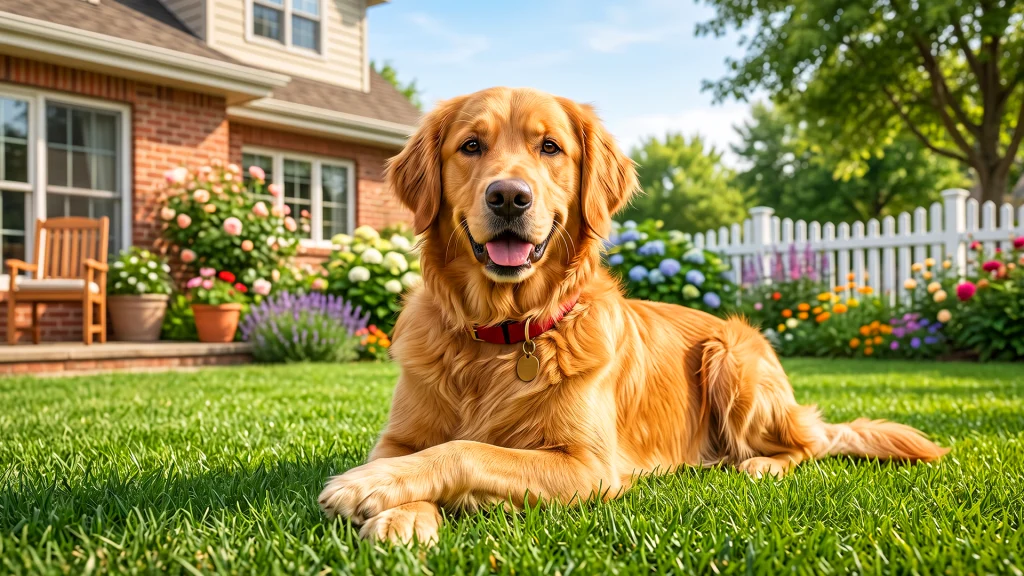
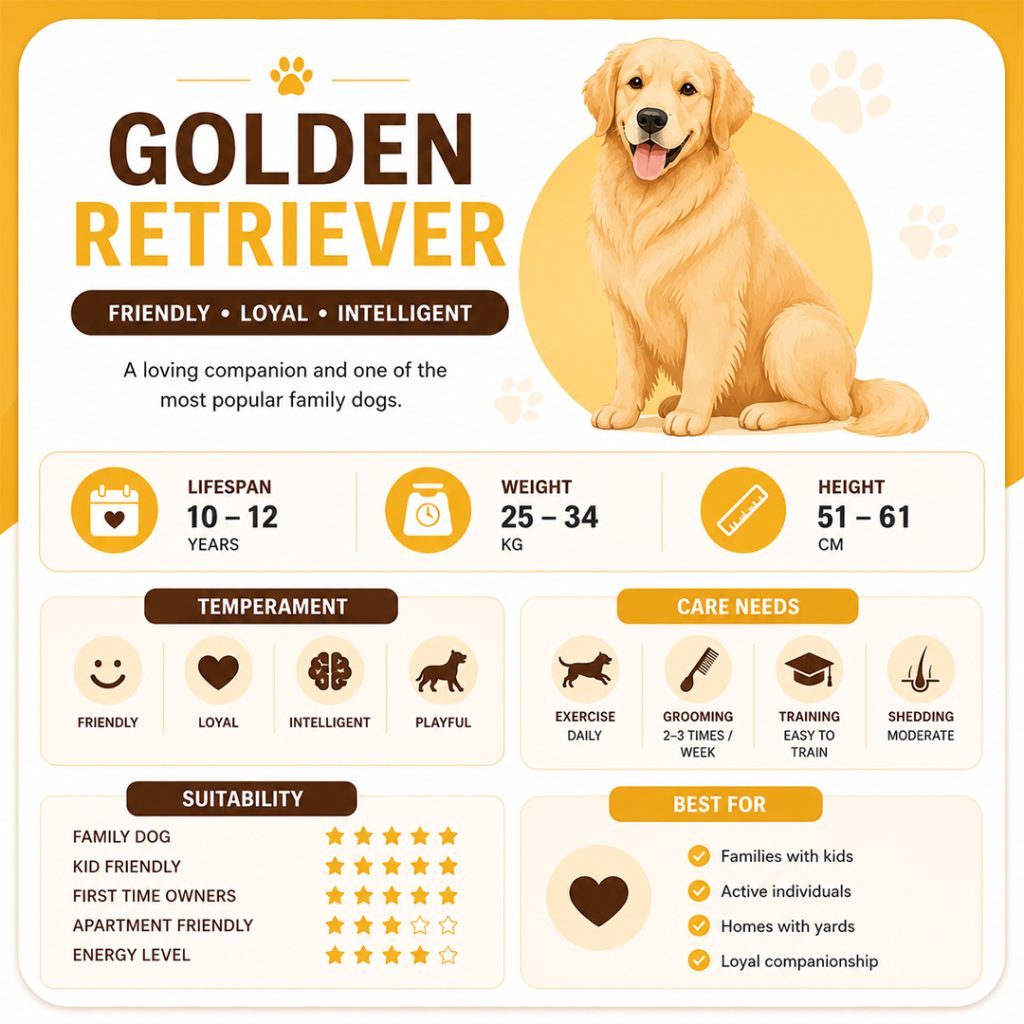
It’s hard to talk about the best family dogs for kids without starting with the Golden Retriever, and there’s a reason this breed shows up at the top of nearly every list. Goldens were originally bred as gentle retrieving dogs for hunters, which shaped them into a breed with a soft mouth, a patient disposition, and an eagerness to please that makes training much easier than with more independent breeds. They’re playful without being pushy, and most Goldens seem to instinctively soften their energy around toddlers and smaller children.
Their intelligence ranks among the highest of all dog breeds, which means they pick up commands quickly and respond well to positive reinforcement. Golden Retrievers also tend to bond closely with every member of the household rather than fixating on one person, which suits busy family dynamics where multiple people share caregiving duties.
Pros
- Exceptionally patient and tolerant with children
- Highly trainable and eager to please
- Rarely shows aggression when properly socialized
- Great with other pets, including cats
- Loyal and affectionate with the whole family
Cons
- Needs significant daily exercise
- Sheds heavily, especially during seasonal changes
- Prone to hip dysplasia and certain cancers
- Not ideal for small apartments without a yard
Best For
Active families with yards, older children who can help with daily walks and play sessions, and first-time owners who want a forgiving, trainable breed.
2.Labrador Retriever

Why This Dog Is Great for Kids
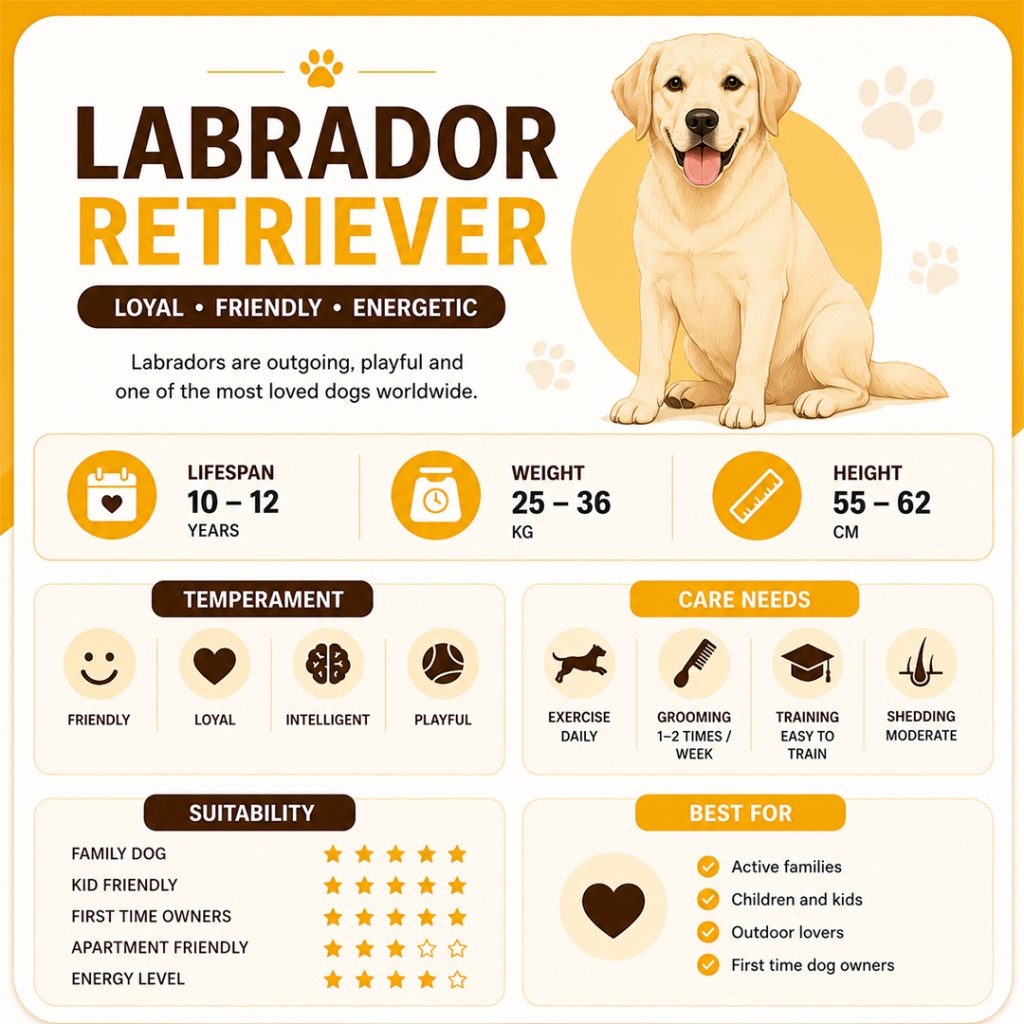
The Labrador Retriever has topped popularity rankings for decades, and families with kids are a big reason why. Labs are famously food-motivated and eager to please, two traits that make obedience training relatively straightforward even for first-time dog owners. Their sturdy, athletic build means they can handle boisterous play without being fragile, and their thick double coat gives them a bit more durability during rough outdoor adventures.
What sets Labs apart is their emotional resilience. They rarely get overwhelmed by noise or chaos, which makes them a great match for households with multiple young kids running around. Labs also mature a bit slower than some breeds, staying playful and puppy-like well into adulthood, so they tend to match a child’s energy and enthusiasm for years.
Pros
- Sturdy build that tolerates rough play well
- Extremely trainable and food-motivated
- Friendly toward strangers, other kids, and pets
- Versatile, low-maintenance coat compared to long-haired breeds
- Naturally social and rarely aloof
Cons
- Prone to obesity if exercise and diet aren’t managed
- Sheds year-round, with heavier seasonal shedding
- Can be mouthy as puppies and needs early bite-inhibition training
- Requires consistent daily exercise to stay calm indoors
Best For
Families with active kids, homes with yard space, and households that want a versatile dog suited to both play and light outdoor adventures.
3.Beagle
Why This Dog Is Great for Kids
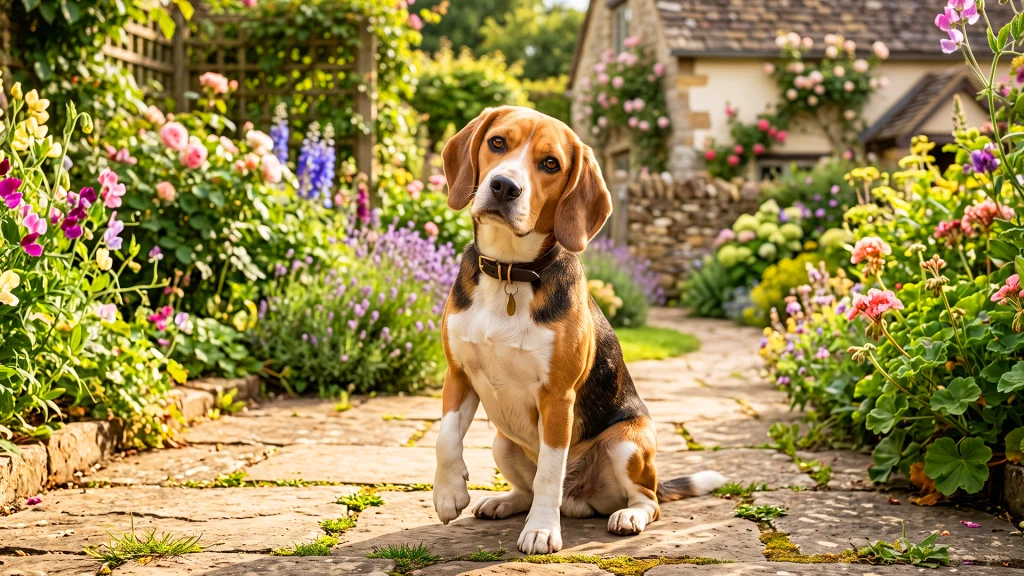
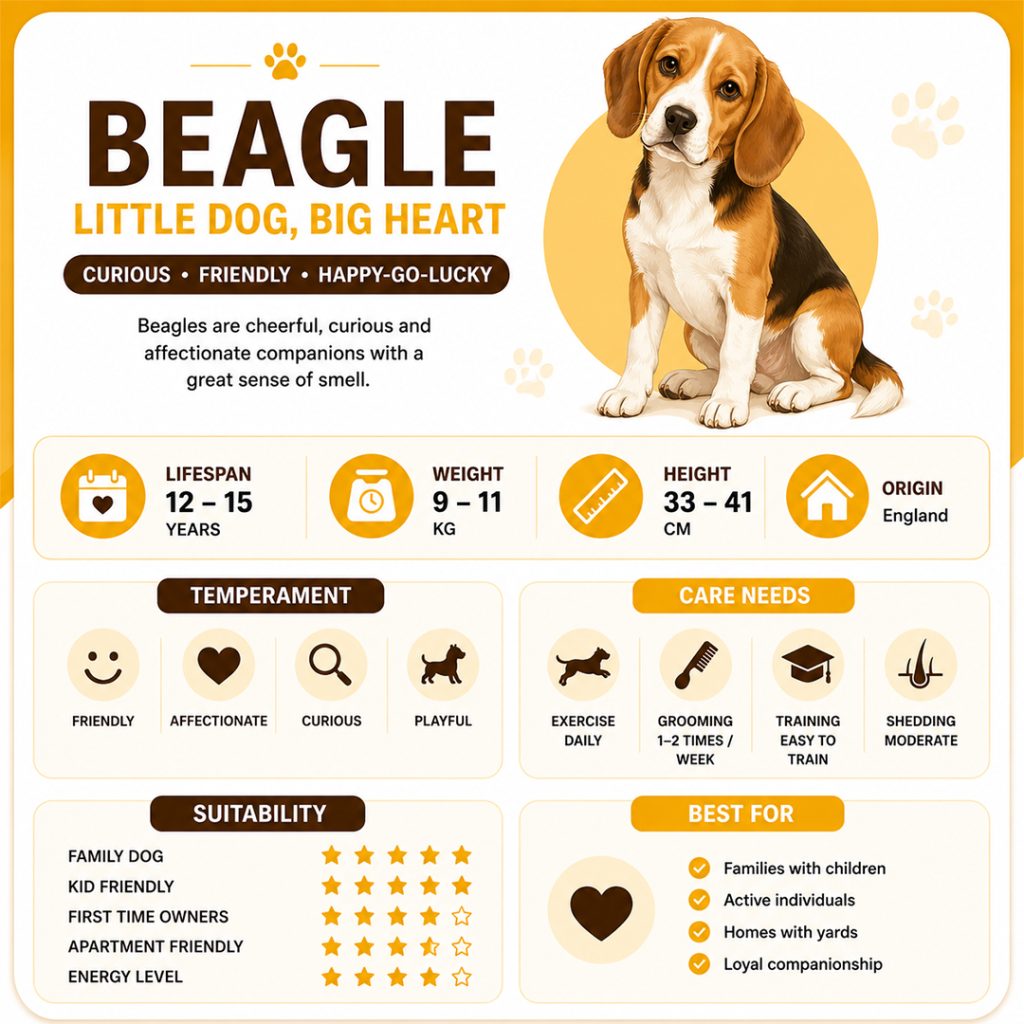
Beagles bring a different kind of family energy than the retrievers on this list. They’re compact, sturdy, and built with the kind of curious, merry temperament that matches well with kids who love exploring the backyard. Bred originally as scent hounds that worked in packs, Beagles are naturally social animals that rarely do well when left isolated, which usually translates into a strong desire to be part of family activities.
Their smaller size makes them less likely to accidentally knock over a toddler compared to larger breeds, while still being sturdy enough to handle typical rough-and-tumble play. Beagles also have a playful, almost comedic personality that tends to keep kids entertained, and their pack-oriented nature means they generally do well with siblings and other household pets.
Pros
- Compact size suits smaller homes and apartments
- Low-maintenance short coat
- Friendly, social, and rarely aggressive
- Sturdy enough for active play with kids
- Good with other dogs due to pack instincts
Cons
- Strong scent drive can lead to wandering if off-leash
- Prone to a stubborn streak that slows training
- Known for a loud, distinctive bark and howl
- Can be prone to weight gain if overfed
Best For
Families in smaller homes who want a compact, low-grooming dog with plenty of personality and don’t mind a vocal companion.
4.Cavalier King Charles Spaniel
Why This Dog Is Great for Kids
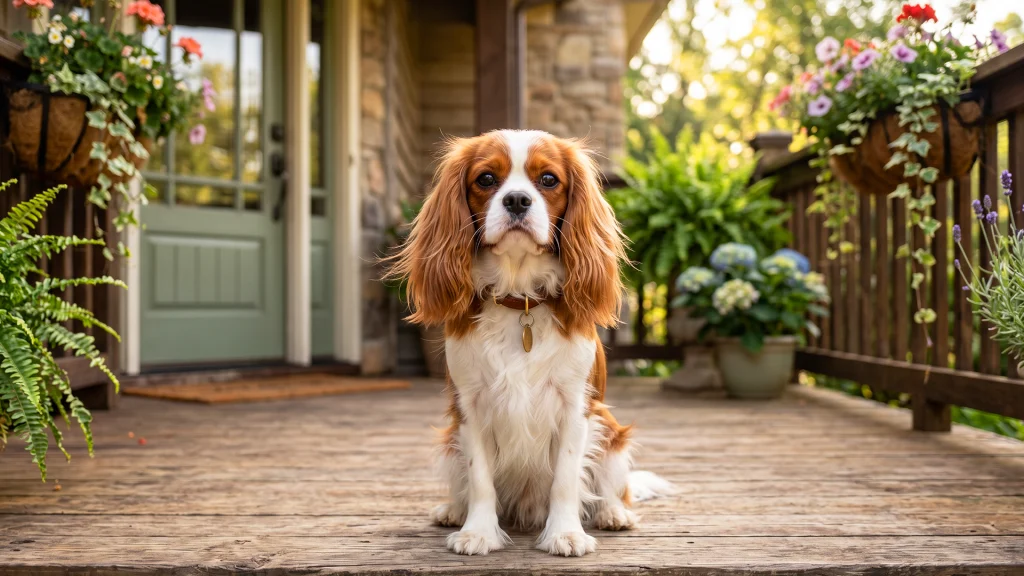
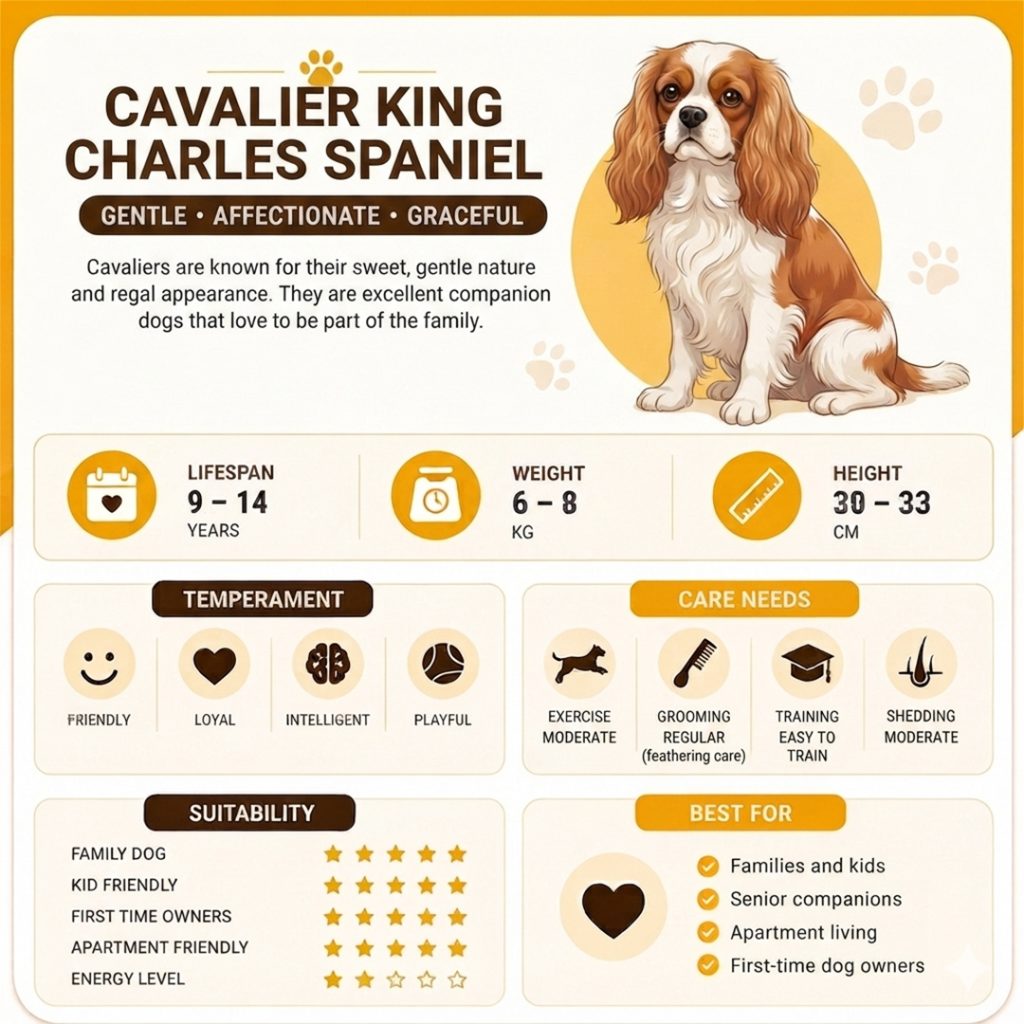
The Cavalier King Charles Spaniel was essentially bred to be a companion, and that history shows in nearly every part of its personality. These dogs are affectionate almost to a fault, happiest when curled up with family members or trailing along behind whoever is home. For families with gentler or younger children, a Cavalier’s soft, easygoing nature makes it one of the more forgiving small breeds when it comes to handling and attention.
Cavaliers rarely show possessiveness or territorial behavior, and they tend to adapt quickly to new routines, new siblings, and new pets. Their moderate energy level means they’re satisfied with a couple of walks and some indoor playtime rather than demanding hours of vigorous exercise, which suits families juggling busy schedules.
Pros
- Gentle, affectionate temperament suited to close contact
- Adapts well to apartments and smaller homes
- Rarely aggressive or territorial
- Gets along well with other pets
- Moderate exercise needs
Cons
- Prone to serious heart conditions, including mitral valve disease
- Long ears and coat need regular grooming and cleaning
- Can develop separation anxiety if left alone too often
- Delicate build means less tolerance for very rough play
Best For
Families with gentler, younger children, smaller living spaces, and households that want a lap-loving companion rather than a high-energy playmate.
5.Poodle (Standard or Miniature)
Why This Dog Is Great for Kids
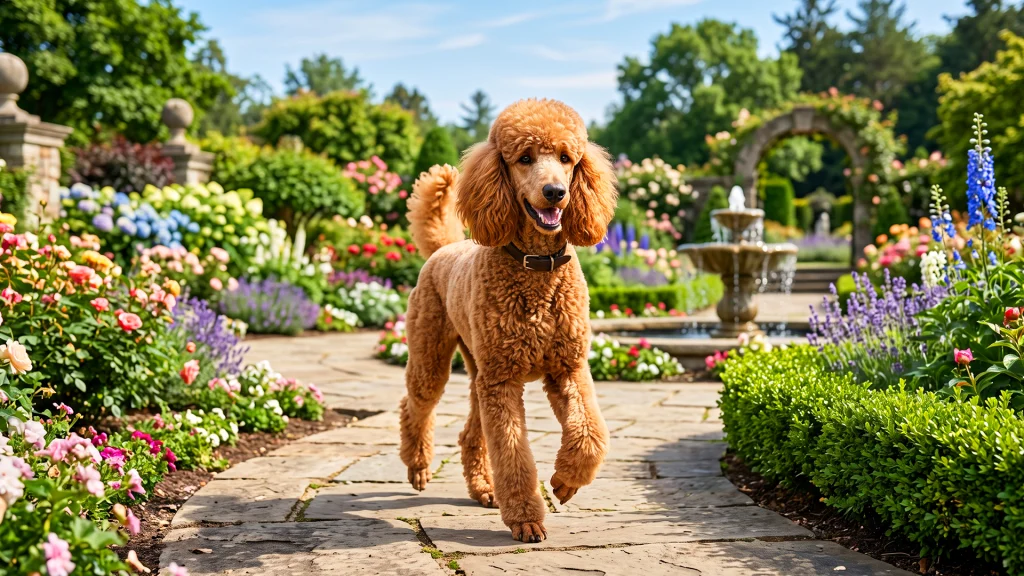
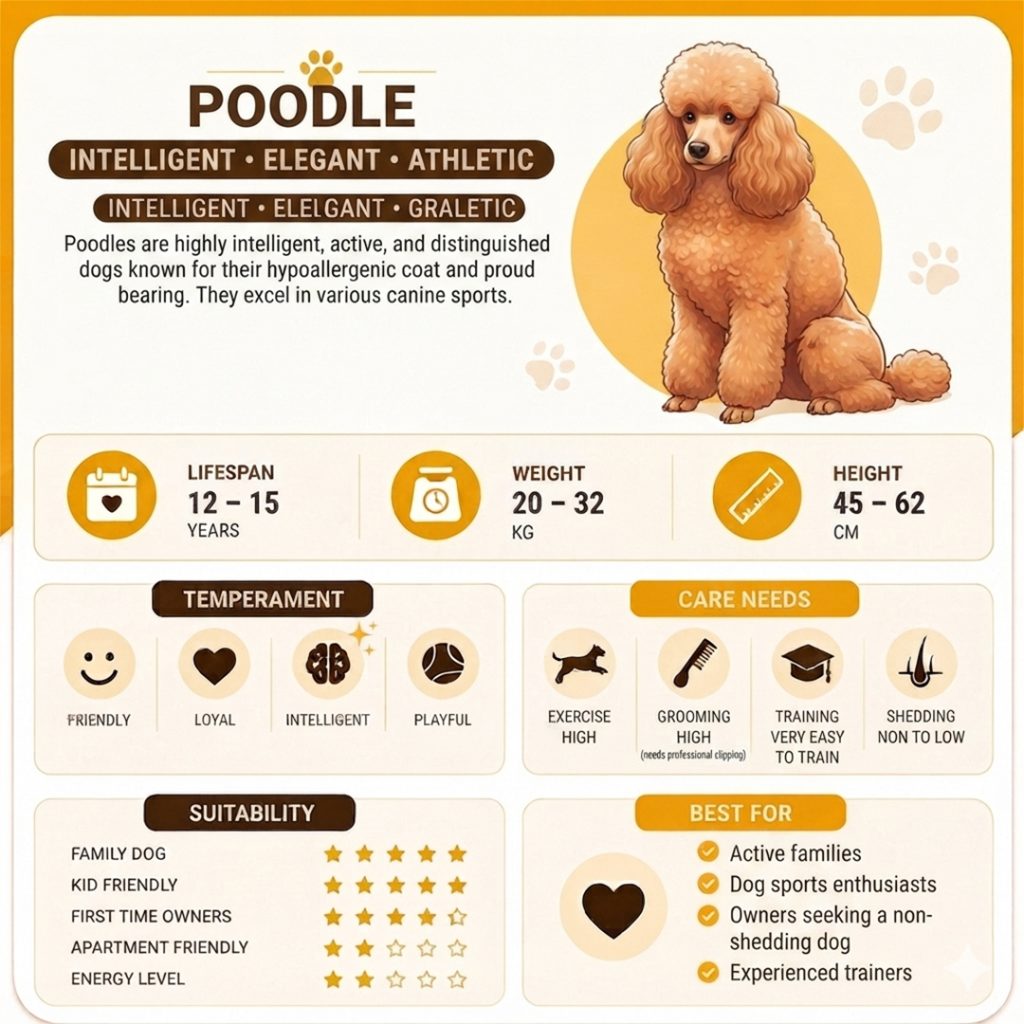
Poodles often get overlooked by families picturing show-ring grooming styles, but underneath that reputation is one of the smartest and most trainable breeds in existence. Poodles come in three sizes — Standard, Miniature, and Toy — which gives families flexibility depending on home size and lifestyle. Their intelligence rivals or exceeds that of the Border Collie, meaning they pick up commands, routines, and even simple tricks remarkably fast.
A major draw for families is the Poodle’s low-shedding, hypoallergenic-leaning coat, which makes it one of the better options for kids with mild allergies. Poodles are also known for their gentle, people-oriented temperament, and Standard Poodles in particular tend to be patient and steady with children, while the smaller varieties suit apartment living.
Pros
- Low-shedding coat, good for allergy-sensitive households
- Extremely intelligent and easy to train
- Available in multiple sizes to fit different homes
- Gentle and people-focused temperament
- Long lifespan, especially in smaller varieties
Cons
- Requires frequent, often costly professional grooming
- Standard Poodles need substantial daily exercise
- Toy and Miniature varieties can be more fragile with rough play
- Can develop anxiety without enough mental stimulation
Best For
Families dealing with allergies, households wanting a highly trainable dog, and families who can accommodate size-specific needs, from apartments to larger homes.
6.Boxer

Why This Dog Is Great for Kids
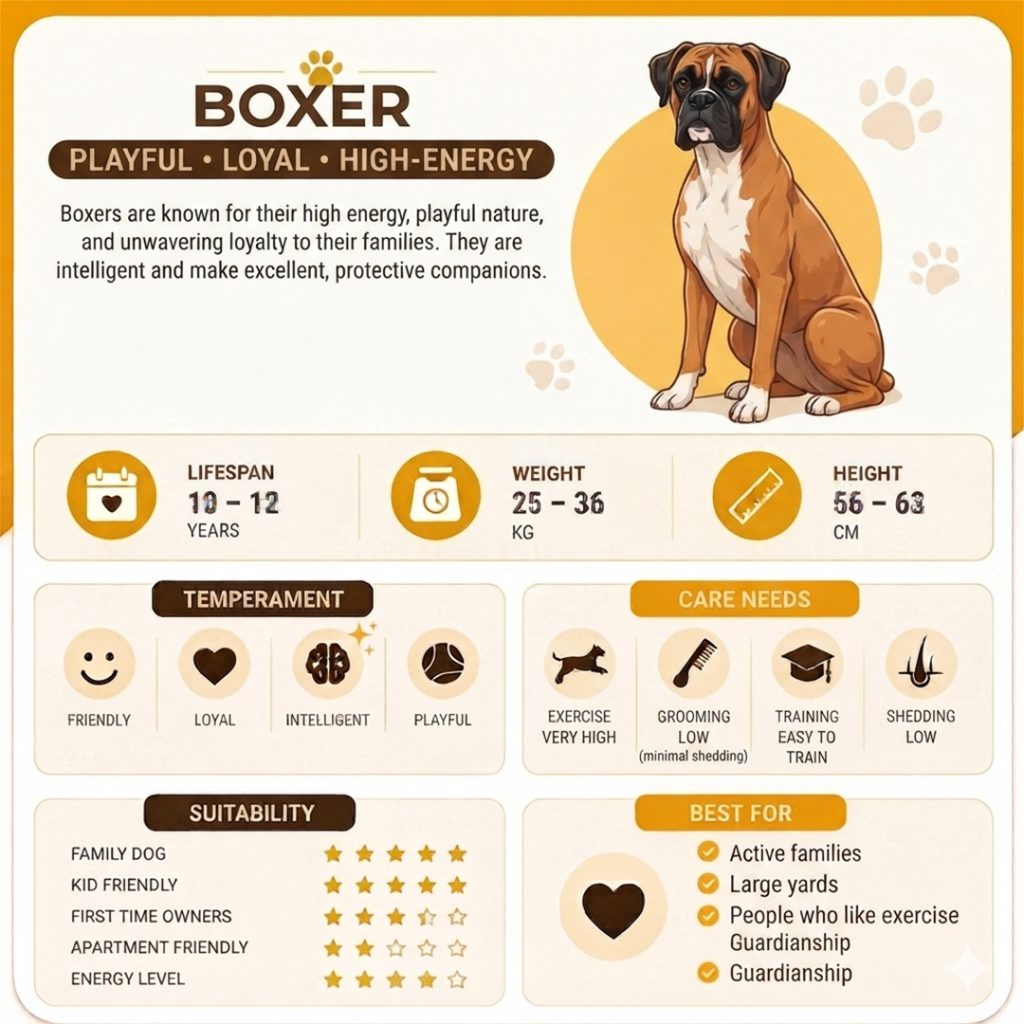
Boxers have a reputation among long-time dog owners as one of the most devoted and playful breeds for families with kids. They’re often described as having a clown-like sense of humor, staying goofy and energetic well into adulthood, which tends to mesh perfectly with active children who want a dog that will actually play with them for hours. Boxers also form intensely loyal bonds with their families and are known for a protective instinct that, when balanced with proper socialization, translates into a watchful but gentle guardian rather than an aggressive one.
Despite their muscular build, well-socialized Boxers tend to be remarkably gentle with children, often self-regulating their strength during play. Their short coat also means grooming stays simple, requiring just occasional brushing.
Pros
- Playful, energetic companion that matches active kids
- Low-maintenance short coat
- Naturally protective without excessive aggression
- Strong loyalty and bonding with family members
- Generally gentle despite a muscular frame
Cons
- High energy requires significant daily exercise
- Can be prone to certain heart conditions and cancers
- Needs early, consistent training to manage strength and enthusiasm
- Not well suited to hot climates due to a short snout
Best For
Active families with a yard, older kids who enjoy high-energy play, and households wanting a dog with a natural protective streak.
7.Collie
Why This Dog Is Great for Kids
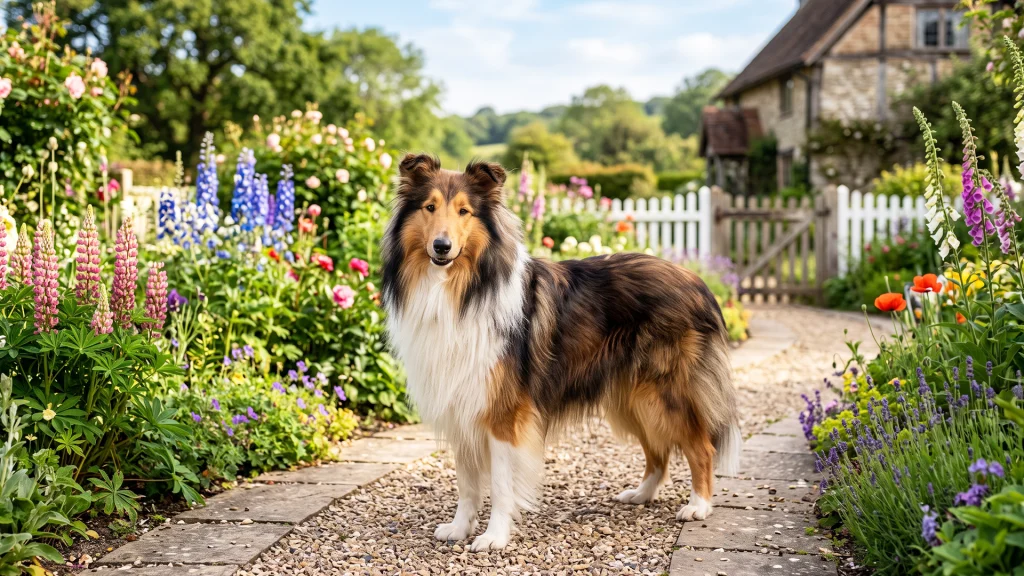
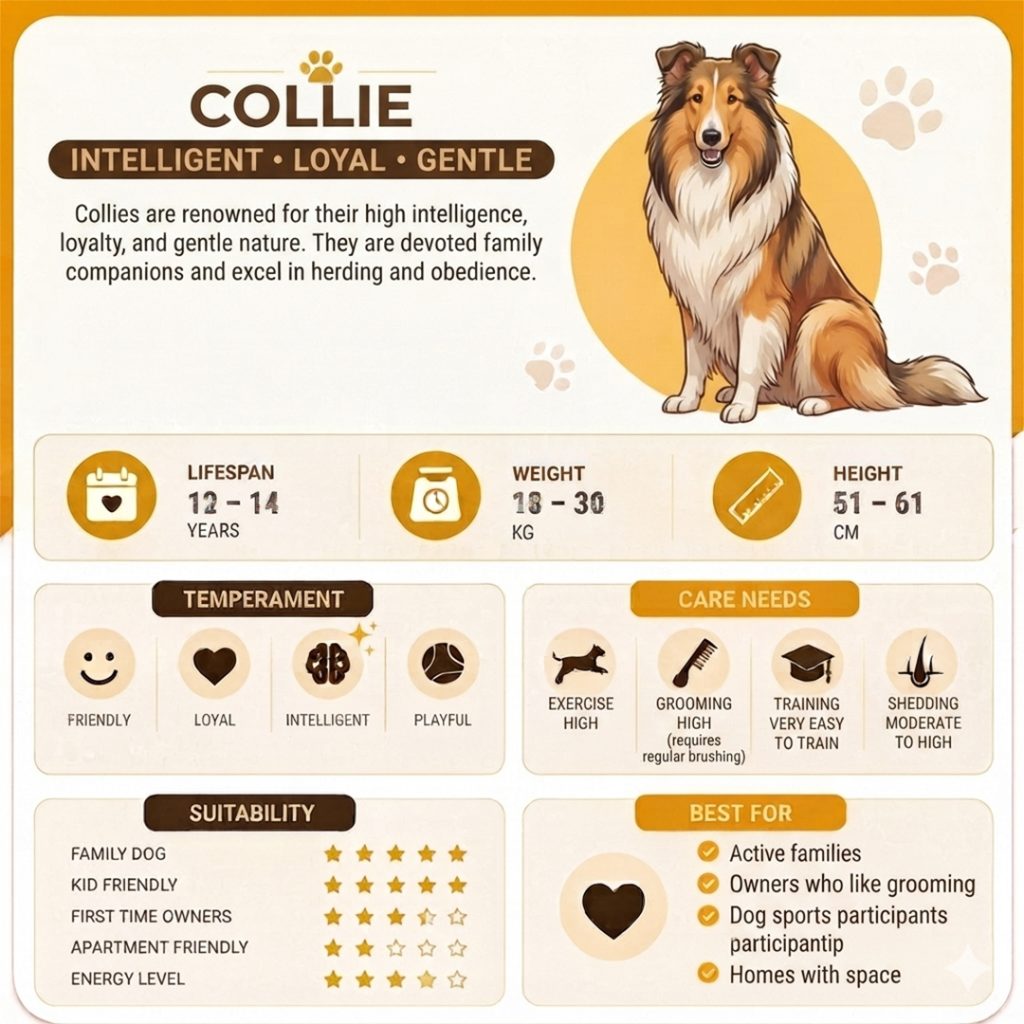
Made famous by Lassie, the Collie’s reputation as a devoted, gentle family dog is well earned. Collies were bred as herding dogs, which gave them a strong instinct to watch over and gently guide family members, including children. This herding background often shows up as a mild, protective attentiveness rather than aggression, and Collies are known for being remarkably patient, even with toddlers who pull ears or tails.
Their intelligence and sensitivity make them highly responsive to training, and they tend to read human emotions well, often adjusting their behavior based on a child’s mood. Collies form close bonds with the whole family rather than a single person, which suits households where care responsibilities are shared.
Pros
- Gentle, patient temperament, even with toddlers
- Highly intelligent and responsive to training
- Naturally protective and attentive to family members
- Gets along well with other pets and animals
- Emotionally in tune with household mood
Cons
- Long coat requires frequent brushing to prevent matting
- Needs regular exercise and mental stimulation
- Can develop separation anxiety if left alone too long
- Prone to certain eye conditions specific to the breed
Best For
Families with yard space, homes with multiple children, and households that value a watchful, gentle companion over a strictly high-energy playmate.
8.Bernese Mountain Dog
Why This Dog Is Great for Kids
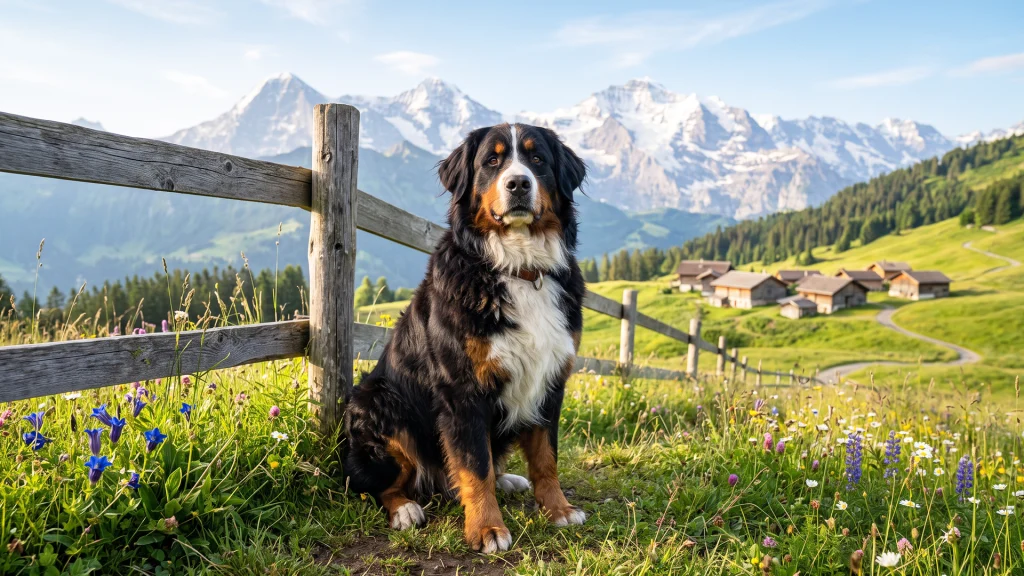
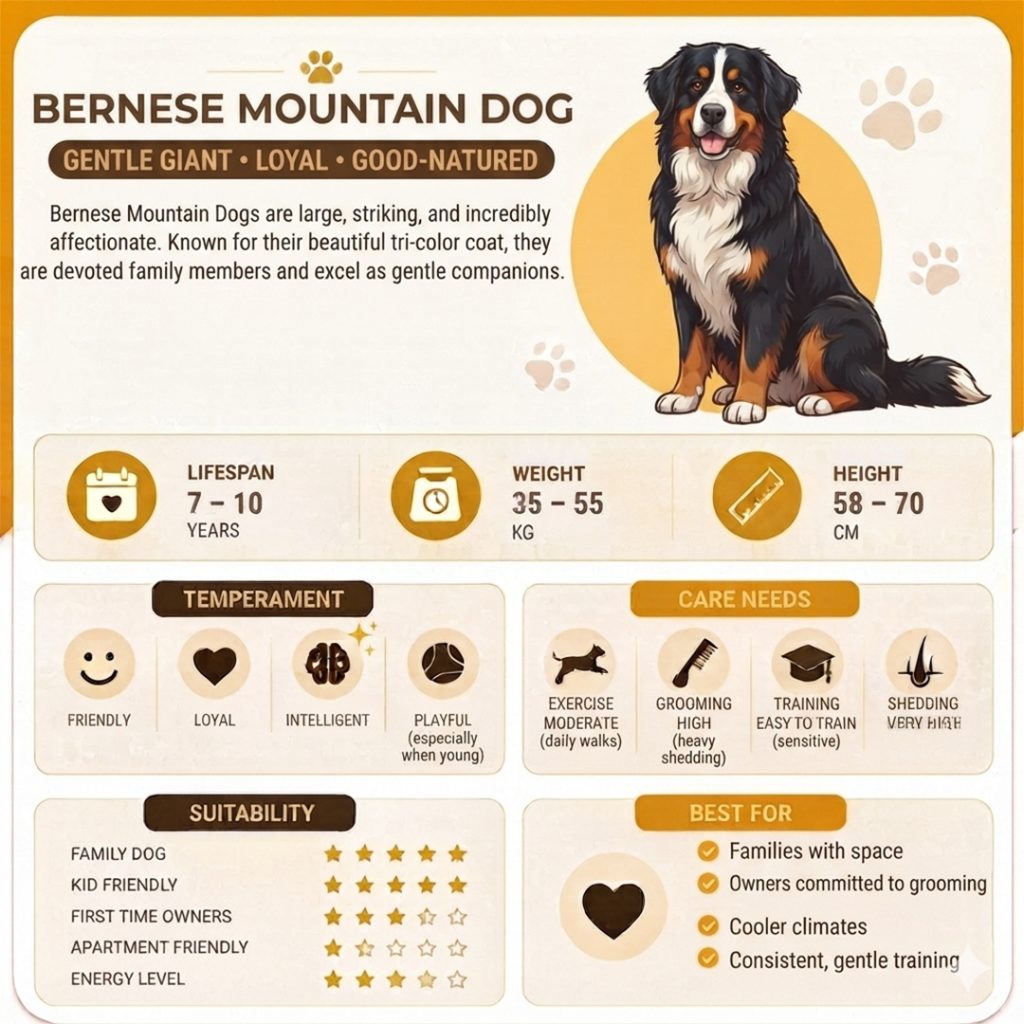
Despite their size, Bernese Mountain Dogs are often described as gentle giants, and that description fits well when it comes to interactions with children. Originally bred as farm dogs in Switzerland, Berners developed a calm, steady temperament suited to working alongside families rather than a high-strung, reactive personality. They tend to move through the household with a relaxed, easygoing demeanor, and most Berners show remarkable tolerance for the noise and unpredictability that comes with young kids.
Their large size means supervision is still important with very small children simply due to accidental bumps, but a well-socialized Berner is affectionate, loyal, and rarely shows aggression. They also tend to bond deeply with their families and thrive on close companionship rather than independence.
Pros
- Calm, gentle temperament suited to family life
- Rarely aggressive when properly socialized
- Loyal and deeply bonded to family members
- Moderate exercise needs compared to other large breeds
- Good with other household pets
Cons
- Shorter lifespan than many other breeds
- Heavy shedding and high grooming demands
- Large size requires supervision with very young children
- Prone to hip and elbow dysplasia, along with certain cancers
Best For
Families with larger homes and yards, households wanting a calm giant breed, and families prepared for higher grooming and veterinary costs.
9.Bichon Frise
Why This Dog Is Great for Kids
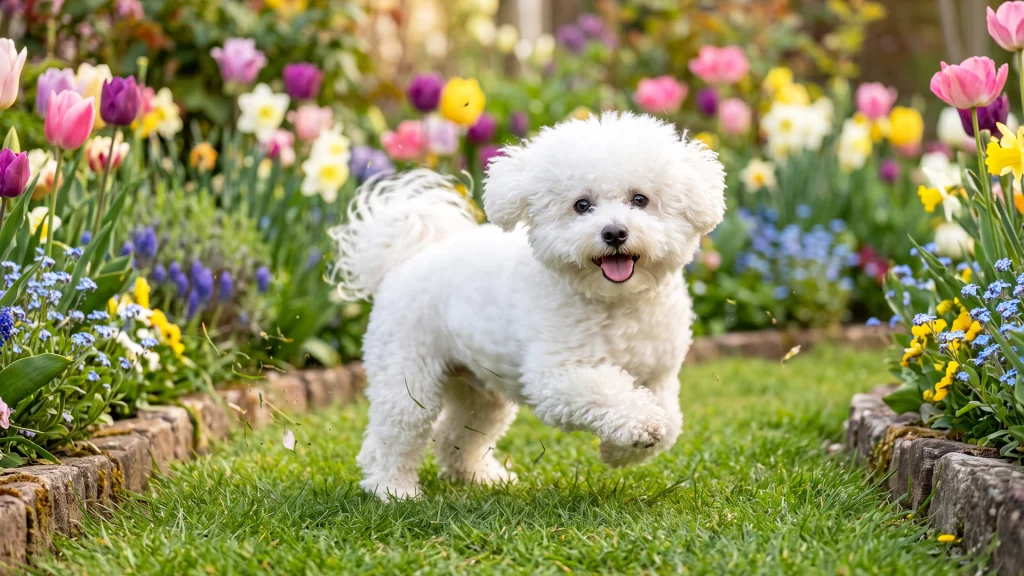
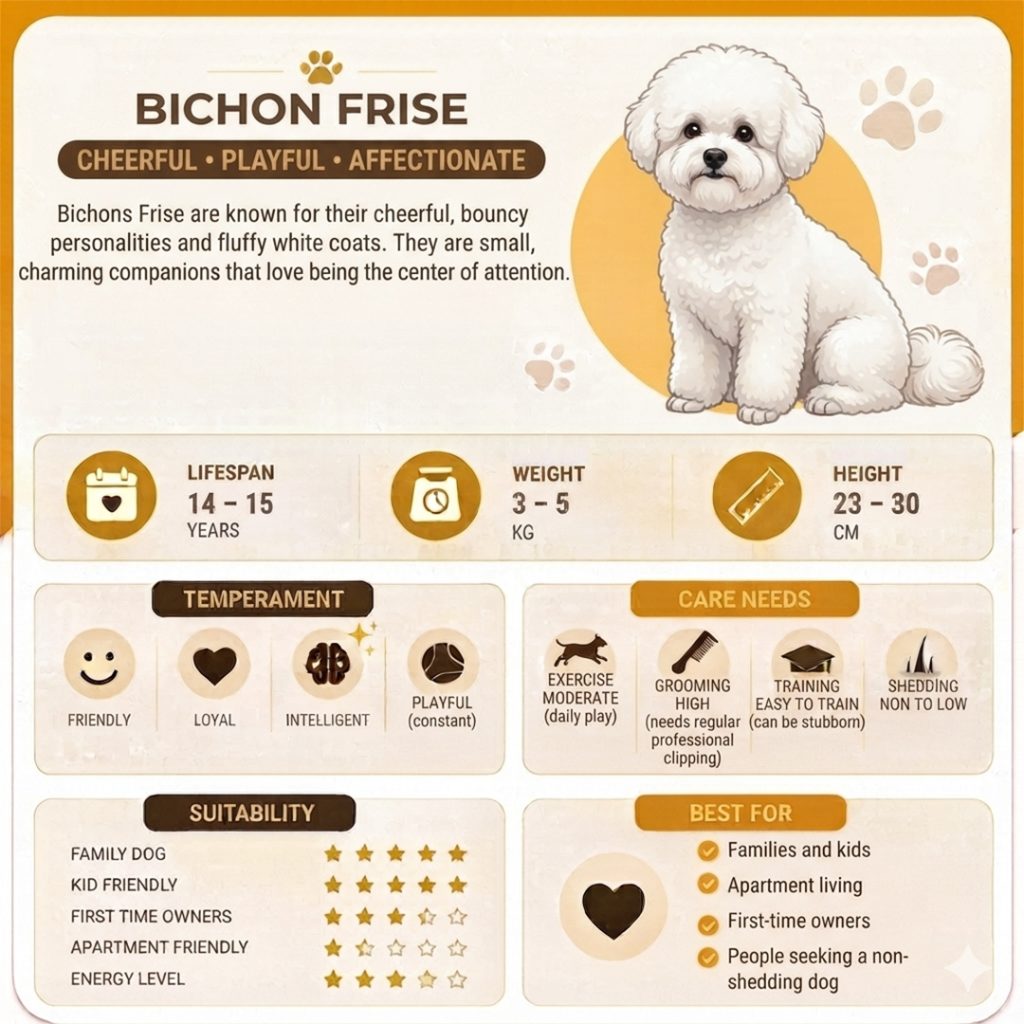
The Bichon Frise packs a cheerful, people-loving personality into a small, sturdy frame, making it a popular choice for families who want a smaller dog without the fragility often associated with toy breeds. Bichons are naturally playful and affectionate, and their happy-go-lucky attitude tends to make them a hit with kids who enjoy an interactive, always-up-for-fun companion.
One of the biggest draws for families is the Bichon’s low-shedding, hypoallergenic-leaning coat, which makes it a solid option for households managing mild allergies. They’re also known for being adaptable, doing equally well in apartments or larger homes, and their moderate exercise needs mean they don’t demand hours of daily activity to stay content.
Pros
- Low-shedding coat suited to allergy-sensitive families
- Cheerful, playful temperament
- Sturdier than many toy breeds
- Adapts well to apartment living
- Long lifespan compared to larger breeds
Cons
- High grooming demands to maintain the curly coat
- Can develop small-dog syndrome without consistent training
- Prone to separation anxiety
- Some lines can be prone to dental issues
Best For
Families in apartments or smaller homes, households managing allergies, and families wanting a cheerful, low-shedding companion.
10.Newfoundland

Why This Dog Is Great for Kids
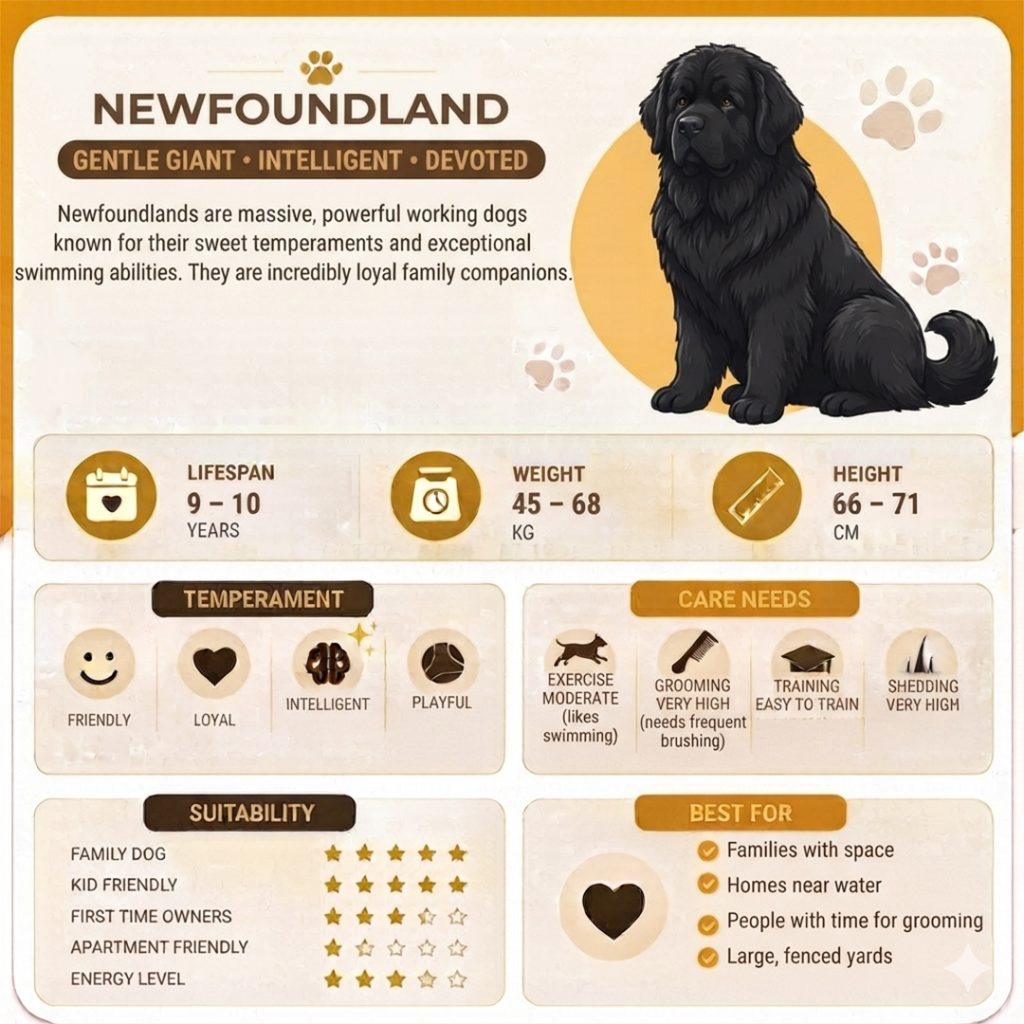
Nicknamed “nature’s babysitter” by many longtime breeders, the Newfoundland has one of the gentlest temperaments of any large breed, which explains its long-standing reputation as an outstanding family dog. Originally bred to work alongside fishermen, pulling nets and even rescuing people from water, Newfoundlands developed an instinctive, protective gentleness toward humans, especially children. Their sheer size is offset by a remarkably calm and careful nature, and many owners describe watching their Newfoundland instinctively soften around toddlers.
These dogs are patient almost to a fault, rarely reactive, and slow to anger even when provoked by rough handling. Their loyalty runs deep, and they tend to form close, protective bonds with every member of the household.
Pros
- Exceptionally gentle and patient with children
- Naturally protective without aggression
- Calmer energy level than many large breeds
- Deeply loyal and family-oriented
- Comfortable around water and outdoor activities
Cons
- Massive size requires significant space
- Heavy shedding and drooling
- Shorter lifespan typical of giant breeds
- Prone to hip dysplasia and certain heart conditions
Best For
Families with larger homes and yards, households wanting a calm giant breed, and families that value a watchful, nurturing presence around kids.
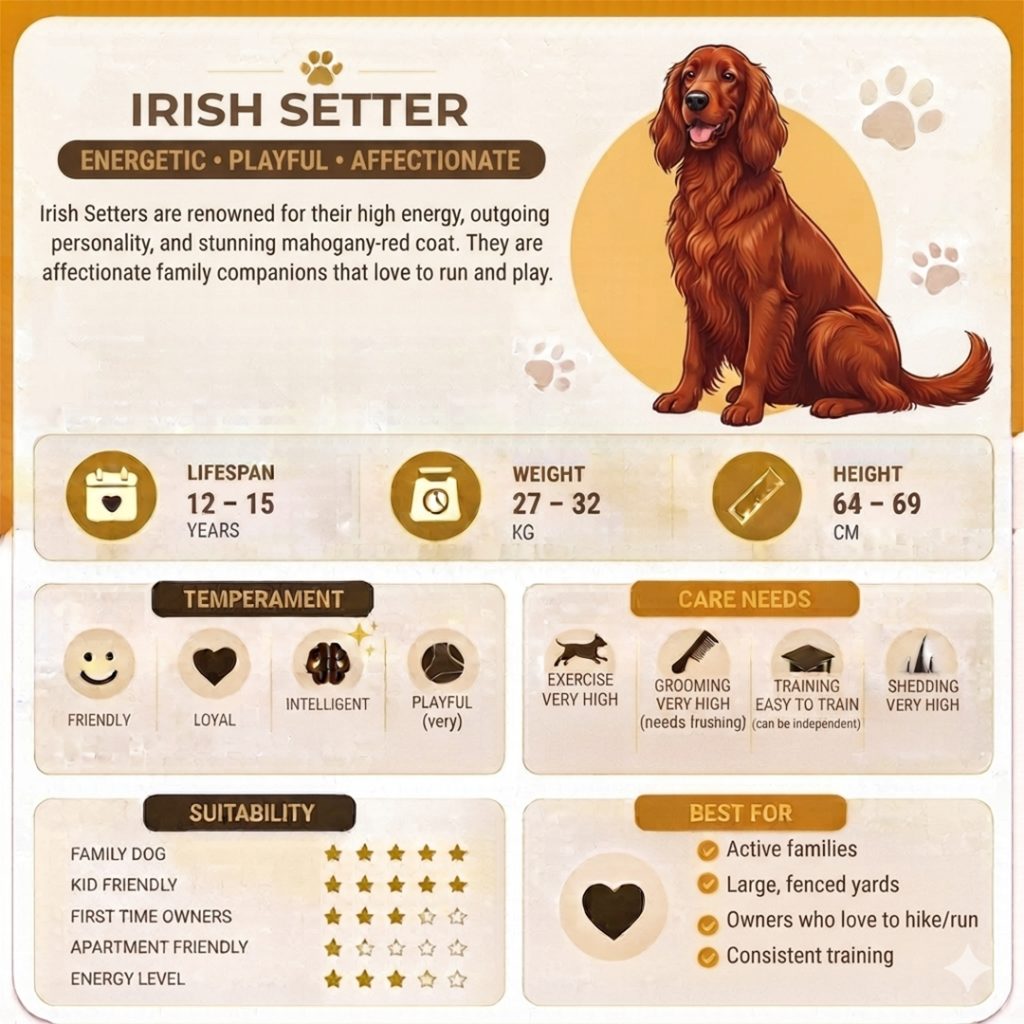
11.Irish Setter
Why This Dog Is Great for Kids
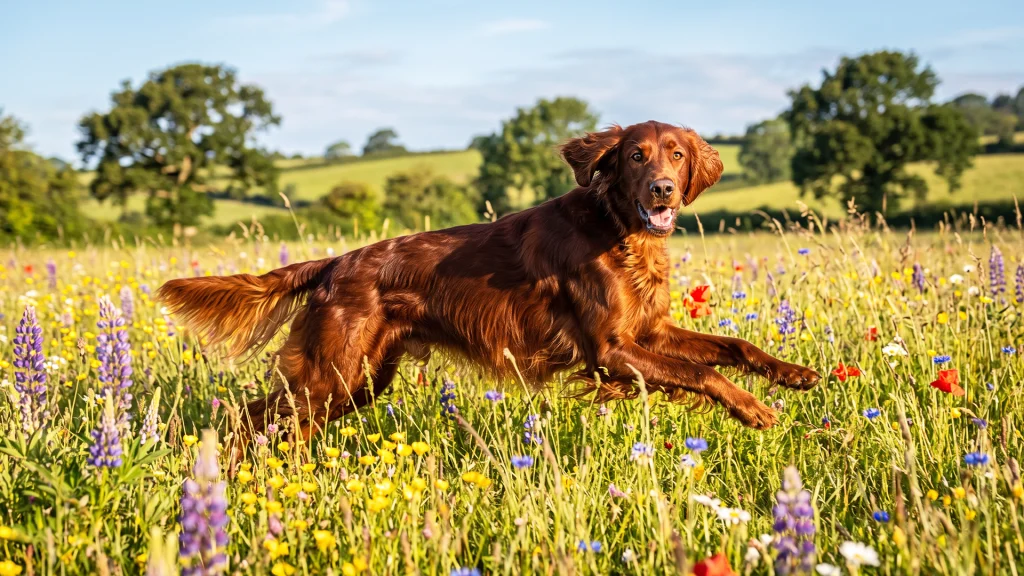
The Irish Setter brings a warm, exuberant energy to family life that tends to suit households with active kids who love outdoor play. Known for their striking red coat and friendly disposition, Irish Setters are consistently affectionate, playful, and eager to be involved in whatever the family is doing. They rarely show aggression and tend to greet strangers, children, and other pets with genuine enthusiasm rather than caution.
Their playful streak lasts well into adulthood, and many owners describe them as perpetual puppies at heart. This makes them a great match for kids who want an energetic playmate, though their enthusiasm means early training is important to prevent jumping and overly excited greetings.
Pros
- Friendly, playful temperament with rarely any aggression
- Great with other pets and unfamiliar people
- Enthusiastic, engaged playmate for active kids
- Beautiful coat that many families love
- Long, generally healthy lifespan
Cons
- Requires significant daily exercise to manage energy
- Needs consistent training to curb jumping and excitability
- Silky coat requires regular brushing
- Not well suited to small apartments
Best For
Active families with yards, older kids who enjoy running and outdoor play, and households wanting a friendly, highly social breed.
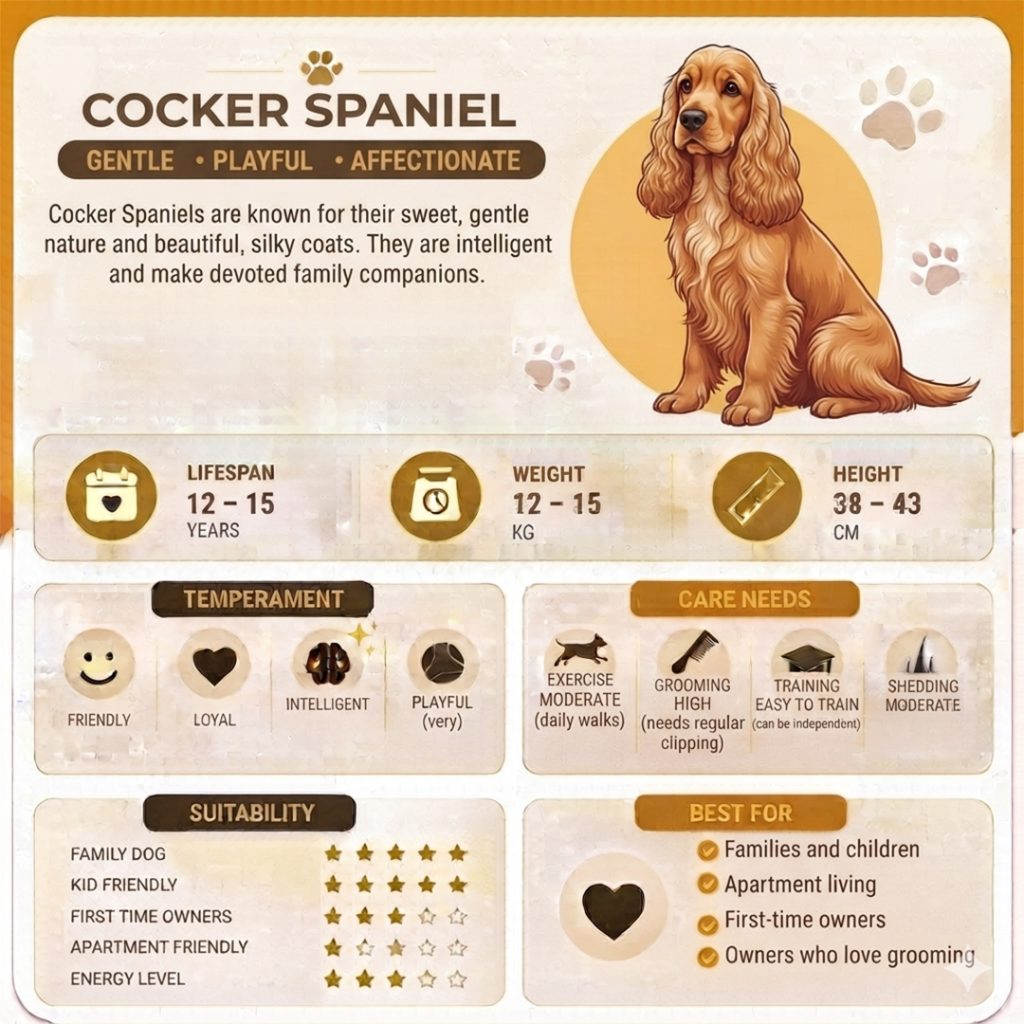
12.Cocker Spaniel

Why This Dog Is Great for Kids
Cocker Spaniels have long been a popular choice for families, and their gentle, affectionate nature explains why. Bred originally as hunting companions, Cockers carry a sweet, eager-to-please disposition that makes training relatively smooth, and their moderate size means they’re sturdy enough for typical play without being overwhelming for smaller children. Cockers tend to be highly attuned to their family’s emotions and often seem to seek out closeness and cuddling more than independent play.
Their moderate energy level suits families who want an active companion without the intensity of higher-energy sporting breeds. Cockers also tend to be adaptable, doing reasonably well in both houses and apartments as long as they get consistent daily walks.
Pros
- Sweet, affectionate temperament
- Moderate size suited to most homes
- Adapts well to apartments with regular exercise
- Eager to please and generally easy to train
- Strong emotional bond with family members
Cons
- Long, silky coat needs frequent grooming
- Prone to ear infections due to long, low-hanging ears
- Can develop separation anxiety
- Some lines are prone to eye and hip issues
Best For
Families wanting a medium-sized, affectionate dog, households in apartments or smaller homes, and families willing to keep up with grooming needs.
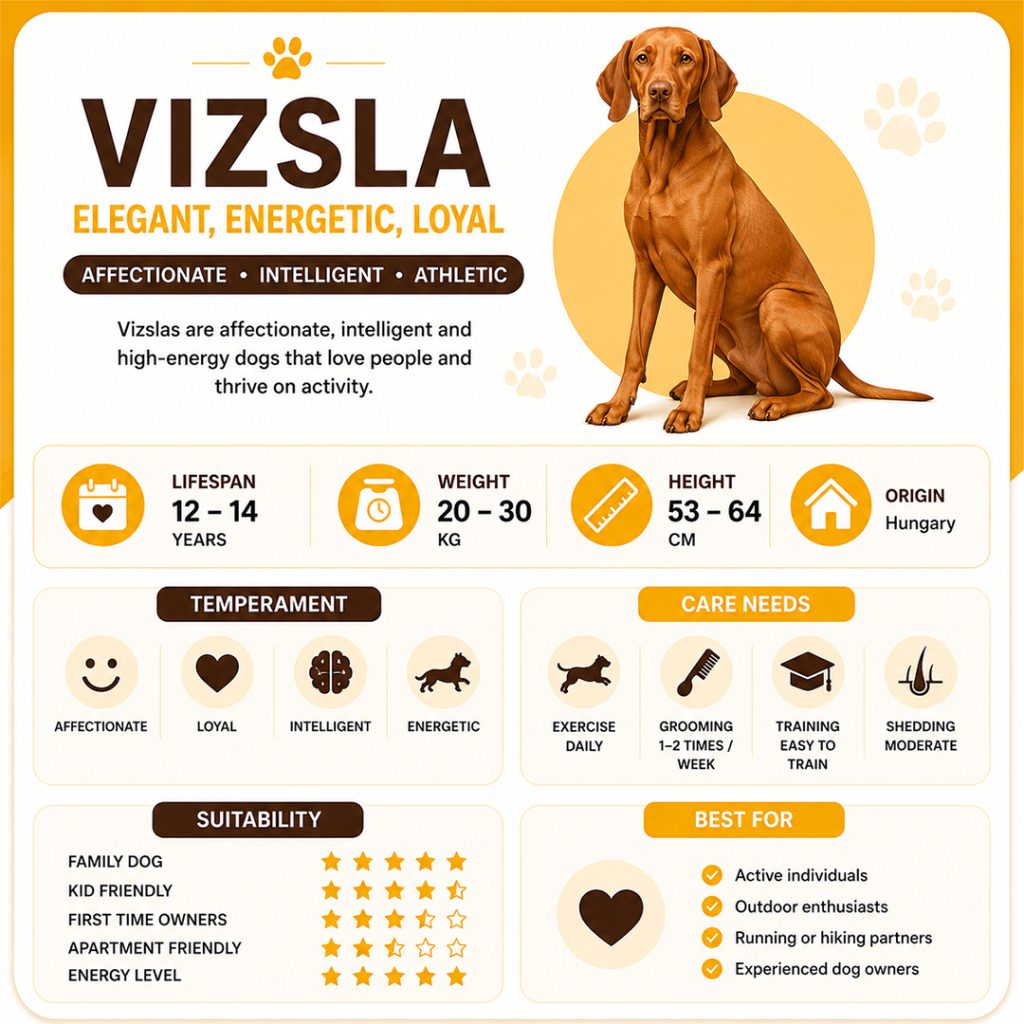
13.Vizsla

Why This Dog Is Great for Kids
The Vizsla is often called the “velcro dog” because of how closely it bonds with its family, following members from room to room and seeking constant closeness. This intense loyalty translates well into family life, especially for households with older, active kids who can match the breed’s high energy. Vizslas are affectionate, gentle, and rarely show aggression, and their sleek, athletic build makes them well suited to running, hiking, and other outdoor activities alongside kids.
Their sensitivity is one of their most notable traits. Vizslas respond best to gentle, positive training methods and tend to form especially close emotional bonds with children who treat them kindly and consistently.
Pros
- Deeply affectionate and loyal to family members
- Low-maintenance short coat
- Athletic and great for active outdoor families
- Gentle, rarely aggressive temperament
- Forms close emotional bonds with children
Cons
- Very high exercise requirements
- Prone to separation anxiety when left alone
- Not well suited to sedentary households
- Sensitive nature requires gentle, consistent training
Best For
Highly active families with older kids, households with yards or easy access to outdoor spaces, and families who can commit to daily vigorous exercise.
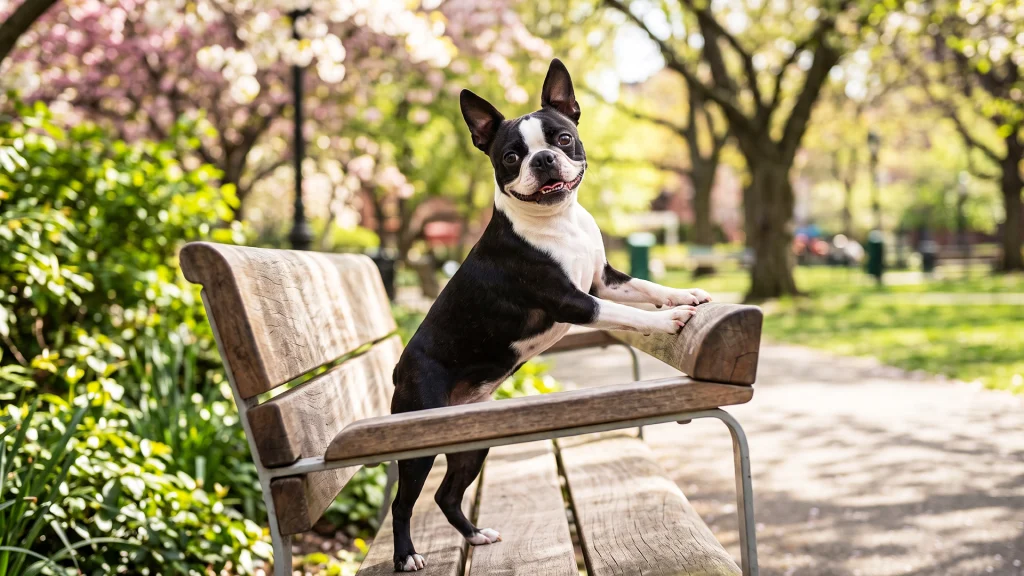
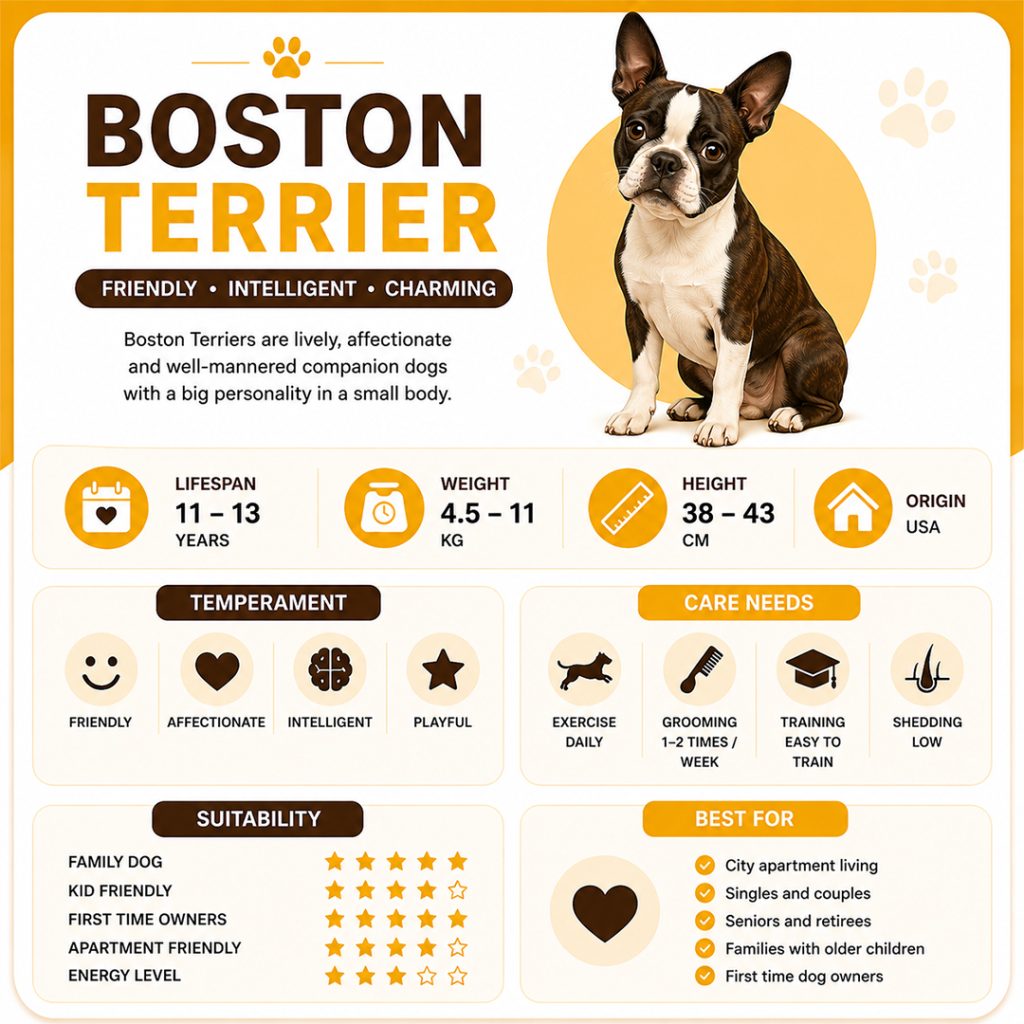
14.Boston Terrier
Why This Dog Is Great for Kids
Nicknamed the “American Gentleman” for its tuxedo-like coat markings, the Boston Terrier brings a friendly, easygoing temperament to households of nearly any size. These small but sturdy dogs are known for being adaptable, affectionate, and surprisingly playful, making them a solid match for families with kids of various ages. Bostons tend to be alert and social without being yappy or anxious, and they generally get along well with children, strangers, and other pets.
Their compact size and moderate exercise needs make them especially well suited to families in apartments or smaller homes who still want an interactive, people-oriented companion. Bostons are also relatively easy to train thanks to their intelligence and eagerness to please.
Pros
- Friendly, adaptable temperament suited to most homes
- Low-maintenance short coat
- Compact size ideal for apartments
- Generally good with children and other pets
- Moderate exercise needs
Cons
- Prone to breathing issues due to a short snout
- Sensitive to extreme heat and cold
- Some lines prone to eye injuries
- Can be prone to separation anxiety
Best For
Families in apartments or smaller homes, households wanting a compact and low-maintenance breed, and families with kids of various ages.
15.French Bulldog
Why This Dog Is Great for Kids
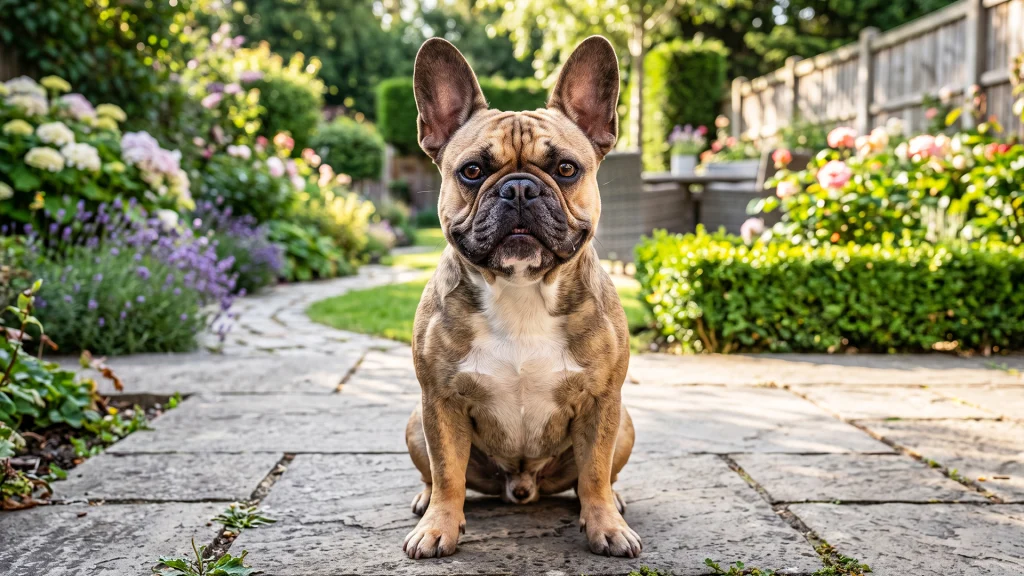
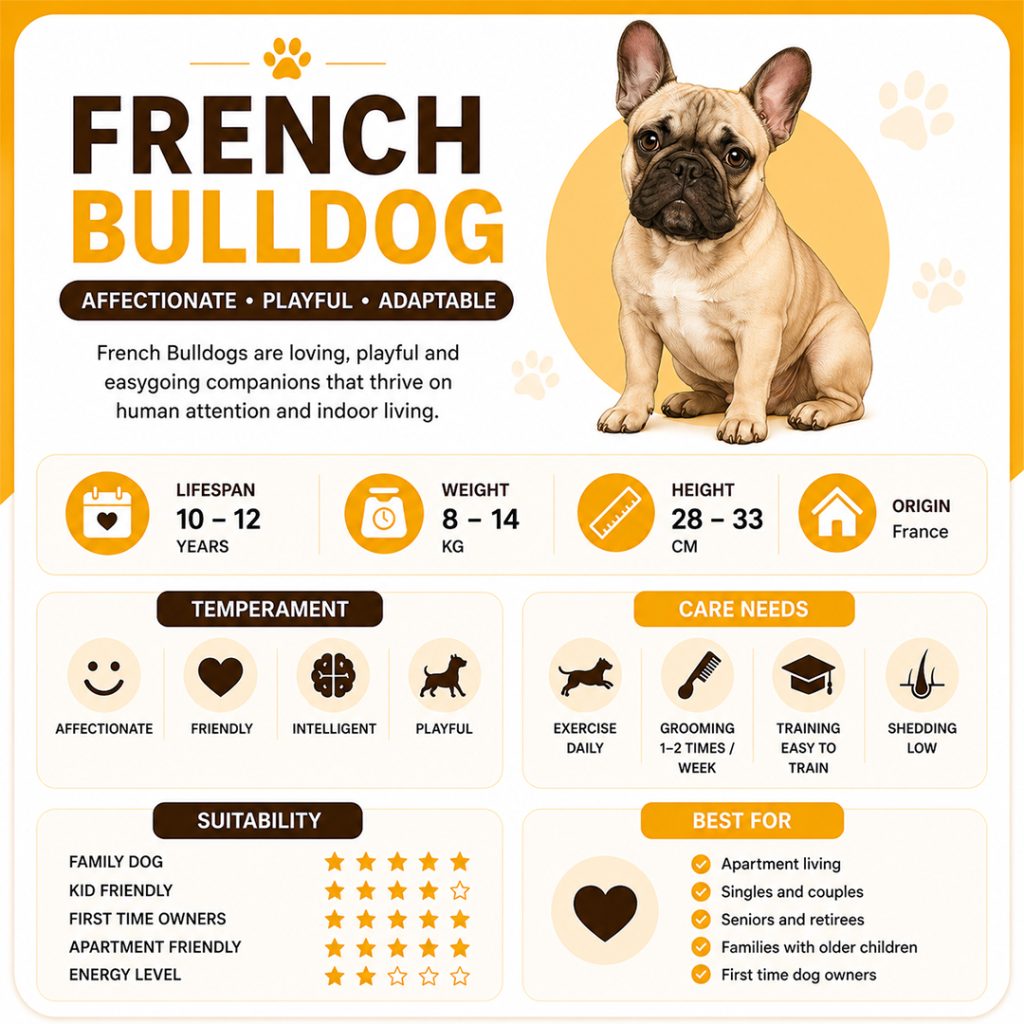
The French Bulldog has become one of the most popular family dogs in recent years, and its calm, affectionate personality is a big part of that appeal. Frenchies are known for their easygoing, low-energy temperament, which makes them a comfortable fit for families who want a companion dog rather than a high-energy playmate. They tend to be highly attached to their families, often following members around the house and settling in close by rather than seeking independence.
Their compact size and gentle nature make them relatively safe around smaller children, though supervision is still important given their sturdy but sometimes sensitive build. French Bulldogs also tend to be low-key barkers, which suits families in apartments or homes with close neighbors.
Pros
- Calm, affectionate temperament suited to families
- Low exercise needs compared to most breeds
- Compact size, great for apartments
- Low-maintenance short coat
- Generally quiet compared to other small breeds
Cons
- Prone to significant breathing issues due to a short snout
- Sensitive to heat and prone to overheating
- Often requires costly veterinary care over its lifetime
- Cannot swim and needs supervision near water
Best For
Families in apartments or smaller homes, households wanting a low-energy companion, and families prepared for breed-specific veterinary considerations.
Comparison Table: Best Family Dogs for Kids
| Breed | Kid Friendly Rating | Energy Level | Trainability | Grooming | Apartment Friendly | Family Type |
| Golden Retriever | 5/5 | High | Excellent | Moderate-High | Low | Active, yard-based |
| Labrador Retriever | 5/5 | High | Excellent | Low-Moderate | Low | Active, yard-based |
| Beagle | 4.5/5 | Moderate-High | Moderate | Low | Moderate | Smaller homes |
| Cavalier King Charles Spaniel | 4.5/5 | Moderate | Good | Moderate | High | Gentler, calmer homes |
| Poodle | 4.5/5 | Moderate-High | Exceptional | High | Moderate-High | Allergy-conscious homes |
| Boxer | 4.5/5 | High | Good | Low | Low | Active, energetic homes |
| Collie | 5/5 | Moderate-High | Excellent | High | Low | Multi-child households |
| Bernese Mountain Dog | 4.5/5 | Moderate | Good | High | Low | Larger homes with yards |
| Bichon Frise | 4.5/5 | Moderate | Good | High | High | Apartments, allergy-conscious |
| Newfoundland | 5/5 | Low-Moderate | Good | High | Low | Larger homes with yards |
| Irish Setter | 4.5/5 | High | Good | Moderate-High | Low | Active, outdoorsy homes |
| Cocker Spaniel | 4.5/5 | Moderate | Good | High | Moderate | Medium-sized homes |
| Vizsla | 4/5 | Very High | Good | Low | Low | Highly active families |
| Boston Terrier | 4.5/5 | Moderate | Good | Low | High | Apartments, smaller homes |
| French Bulldog | 4/5 | Low-Moderate | Moderate | Low | High | Apartments, low-energy homes |
How to Choose the Right Dog for Your Family
Even with a strong list of kid-friendly breeds to choose from, the right decision still comes down to your family’s specific situation. A few practical factors should guide your final choice:
- Home size — Large, active breeds like Golden Retrievers or Newfoundlands need space to move around, while breeds like the French Bulldog or Boston Terrier adapt well to apartments.
- Children’s age — Toddlers benefit from sturdier, more patient breeds, while older kids can usually handle higher-energy dogs that need more structured play and exercise.
- Budget — Grooming costs, food, veterinary care, and breed-specific health issues can add up significantly over a dog’s lifetime, so factor this in before falling in love with a particular breed.
- Grooming — Long-haired or curly-coated breeds like the Poodle, Bichon Frise, or Cocker Spaniel require far more time and money than short-coated breeds like the Boxer or French Bulldog.
- Exercise — Be honest about how much daily activity your family can realistically commit to, since under-exercised high-energy dogs often develop behavioral problems.
- Time commitment — Puppies, in particular, require significant time investment for training and socialization, which matters if both parents work full-time.
- Allergies — If anyone in the household has allergies, lean toward lower-shedding breeds like the Poodle or Bichon Frise, and always spend time with the breed beforehand.
- Experience level — First-time owners generally do better with highly trainable, forgiving breeds like the Labrador Retriever or Golden Retriever rather than more independent or stubborn breeds.
Common Mistakes Families Make When Choosing a Dog
- Choosing only based on appearance. A dog’s looks say nothing about whether its temperament and energy level will suit your household.
- Ignoring energy level. A high-energy breed in a low-activity household is one of the most common reasons for behavioral issues and returns to shelters.
- Not considering grooming. Long-haired, high-maintenance breeds can become a significant time and financial burden if families underestimate the commitment.
- Underestimating training. Even naturally gentle breeds need consistent, early training and socialization to reliably behave well around children.
- Buying from irresponsible breeders. Poor breeding practices increase the risk of health and temperament issues, so always research breeders or consider reputable rescue organizations.
Frequently Asked Questions
Which dog is safest for kids? Breeds like the Golden Retriever, Labrador Retriever, Collie, and Newfoundland are widely considered among the safest for kids due to their patient, gentle, and non-aggressive temperaments when properly trained and socialized.
What is the easiest family dog? The Labrador Retriever is often considered the easiest family dog thanks to its trainability, forgiving temperament, and adaptability to different household routines.
Which dog breed is best for first-time owners? Golden Retrievers and Labrador Retrievers are excellent choices for first-time owners because of their eagerness to please and straightforward training needs.
Which small dog is best for children? The Beagle, Cavalier King Charles Spaniel, and Boston Terrier are among the best small dog breeds for children, offering friendly temperaments in a more compact size.
Are large dogs safer than small dogs? Not necessarily. Safety depends more on temperament and training than size, though larger breeds like the Newfoundland and Golden Retriever are known for exceptional patience with children.
Do family dogs require professional training? Professional training isn’t always required, but structured obedience classes can significantly improve behavior and safety, especially for higher-energy or independent breeds.
What dog breeds are best for toddlers? Patient, sturdy breeds like the Golden Retriever, Labrador Retriever, Newfoundland, and Collie tend to handle the unpredictability of toddlers especially well.
How do I introduce a new dog to children? Introductions should happen gradually and under supervision, starting with calm, controlled interactions and always teaching kids how to approach and handle the dog respectfully.
Are hypoallergenic dogs better for families with allergies? Breeds like the Poodle and Bichon Frise shed less and produce less dander, which can make daily life easier for family members with mild allergies, though no breed is completely allergen-free.
How much exercise does a family dog need? This varies widely by breed, ranging from 20–30 minutes a day for lower-energy breeds like the French Bulldog to well over an hour for high-energy breeds like the Vizsla or Golden Retriever.
Conclusion
There’s no single “best” family dog for every household, but the 15 breeds covered in this guide represent some of the most consistently kid-friendly, trainable, and family-oriented options available. Whether your household leans toward the boundless energy of a Labrador Retriever, the gentle patience of a Newfoundland, or the low-shedding convenience of a Poodle or Bichon Frise, the right choice comes down to matching a breed’s temperament and needs with your family’s lifestyle, home, and children’s ages.
Take time to research individual breeders or rescue organizations, meet the dog beforehand when possible, and commit to early training and socialization no matter which breed you choose. A well-matched dog can become one of the most meaningful parts of your children’s upbringing, teaching responsibility, patience, and companionship in ways few other experiences can. If you’re ready to take the next step, consider reaching out to a reputable breeder or local rescue to start meeting some of these wonderful family-friendly breeds in person.